Showing posts with label Green Roof. Show all posts

Green Cast / Kengo Kuma


Green Cast / Kengo Kuma


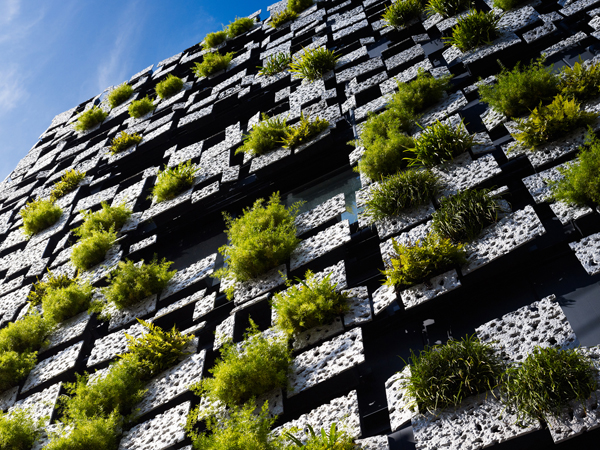
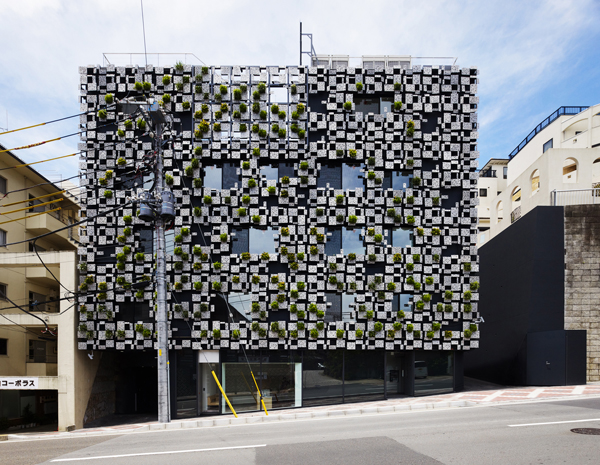
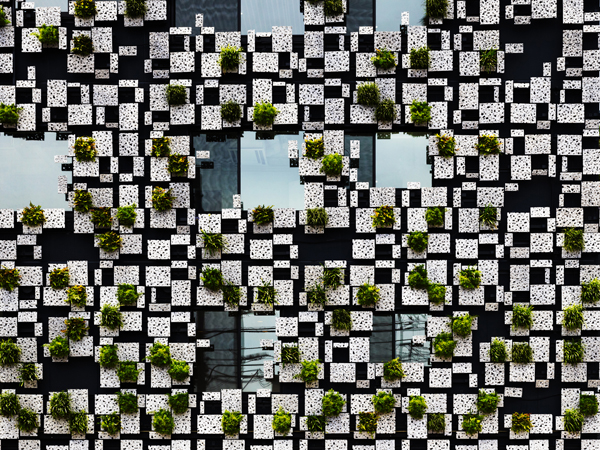
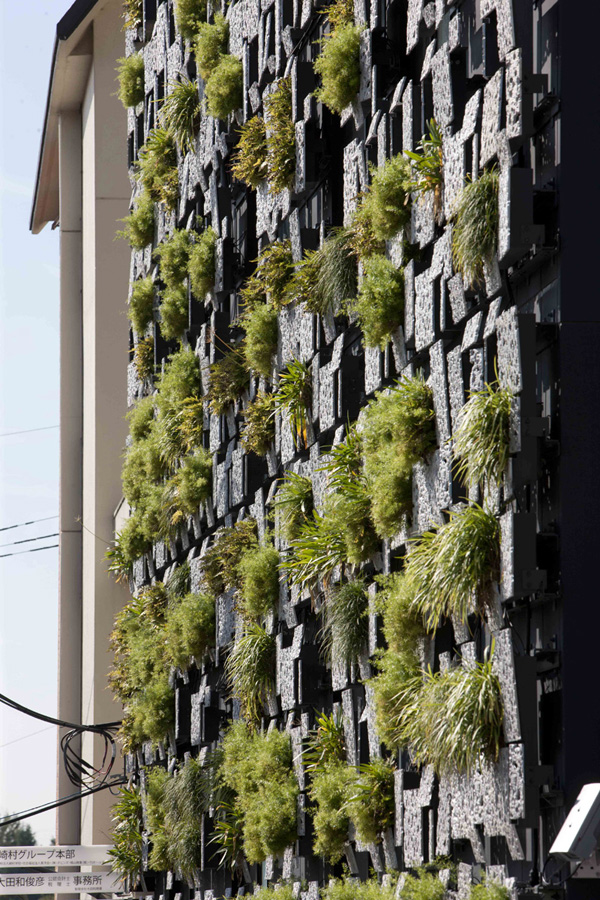
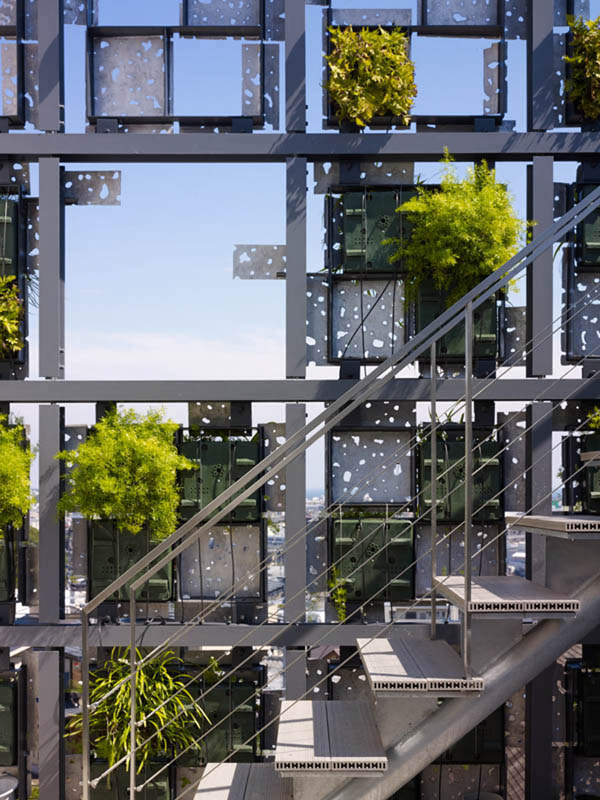
Here is another Kengo Kuma’s project that speaks of the continuous interest in reconnecting architecture with nature or, to quote the architect, the need “to recover the place”. Using architecture as a frame of nature, the project seems to echo a need for experiencing built space through its interaction with the elements and transformations affected by the passage of time. The faceted wall is populated with plants, creating an impression of two tectonic forces, the natural and the artificial, fighting for supremacy.

The multi-purpose building is located near the railway station in Odawara, Japan.The façade, achieved by using decayed styrene foam, encompasses the building, leaving the ground floor transparent and accessible. The first floor facilitates a clinic and pharmacy while the upper floors are used for offices. The planters are comprised of aluminium die-cast panels, made in monoblock casting. Each panel is slanted, and its surface appears to be organic, of which cast comes from decayed styrene foam. Equipment such as watering hose, air reservoir for ventilation and downpipes are installed behind the panels so that the façade can accommodate a comprehensive system for the building. The piping delivers rain water to the aluminum die-cast planters, keeping the whole structure organic and alive.


ACROS Fukuoka: The Largest “Green Roof” in Japan


ACROS Fukuoka: The Largest “Green Roof” in Japan


We ever discuss issues Green Roof which is currently applied inmany different buildings and houses. And that is also “most” Green Roof.

Building ACROS (Asian Crossroads Over The Sea) in the city of Fukuoka, Japan, the building may be the most environmentally friendly (eco-friendly) in the city (perhaps also in Japan).

That Buildings have a height of about 60 meters and buildings such as in general, which is decorated with glass in front, but the back of a garden that looks green and knowledgeable with the 35,000 plants that also spread to the roof of the building.With the terraced roof design at each level of the roof that have built a beautiful garden.


The goal, of course, to reduce heat in the building so the usage Air Condition (AC) is not too large, and also filter out the dirty air around.

Earth Ways Green Roof Pavilion


Earth Ways Green Roof Pavilion


The Earth Ways Green Roof Pavilion


Project Name: Earth Ways Green Roof Pavilion
Year: 2004
Owner: Missouri Botanical Garden
Location: St. Louis, MO, USA
Building Type: Educational
Type: Extensive, Test/Research
System: Single Source Provider
Size: 170 sq.ft.
Slope: 0%
Access: Inaccessible, Open to Public
Submitted by: Kelly Luckett

Designers/Manufacturers of Record:
Project Manager: Kelly Luckett, GreenRoof Blocks
Grower: Vic Jost, Jost Greenhouse
Green Roof Plant Advisor: Ed Snodgrass, Emory Knoll Farms
Modular Greenroof System: Green Roof Blocks


The Green Roof Pavilion at the Earth Ways Home for the Missouri Botanical Garden was finished on June 17, 2004. The 12’ x 14’ pavilion showcases Green Roof Blocks, from Saint Louis Metalworks, used to ballast the EPDM single ply membrane roofing system. The pavilion is a collaboration of area businesses and the Missouri Botanical Garden to increase public awareness of the green roofing concept and to educate the public about the many benefits of green roofing.

Saint Louis Metalworks Company spearheaded this project with the cooperation of Lowe's, Home Depot, Handyman Hardware, Roofer’s Mart, and Crown C Supply who donated materials needed for the construction of the pavilion. Blue prints and site plan were a joint effort of The Manske Corp. Architects and Ralph Waffer Arctitectural and Planning. The Korte Company, Lakeside Roofing, Shay Roofing, Sheet Metal Workers Local 36, and the Rental Service Center donated the necessary labor and equipment to construct the project. Saint Louis Metalworks Company and Jost Greenhouse provided the Green Roof Blocks tm to cover the pavilion rooftop with a variety of sedum plants.

The Earth Ways Home will add green roofs to their educational tours that teach visitors about the many environmentally beneficial materials and systems employed by the Home. The Earth Way Home has ground source heating and cooling, solar panels, water saving fixtures, a variety of materials manufactured from recycled materials, and natural grass landscaping and composting areas, just to name a few of the attractions. Area students will be invited to join in experiments that will show how the green roof functions to clean and reduce storm water runoff and to lower the rooftop temperature, helping to ease the urban heat island.


The 12 foot by 14 foot pavilion was constructed to closely resemble a historic structure at the facility. This basically meant copying the decorative corbels and the trim accents. Concerns of super cooling effects due to the opened sided nature of the pavilion prompted the installation of 3.5 inch nail base insulation (-/+ R26). The .045 mil EPDM was installed over the insulation and turned down the sides of the fascia boards. Pre-finished Kynar Green Roof Edge matching the color scheme of the architectural elements present on the project, was used to conceal the sides of the Green Roof Blocks and to help direct the storm water to the gutter. The modular Green Roof Blocks were then set in place using a crane to hoist four Blocks at one time to the rooftop, 42 in all.

There are six rows of seven Blocks; two rows of Kamschaticum, two rows of Spurium, and two rows of Sexangulare. This combination provides plenty of winter interest while still having breath taking seasonal blooming. This project displays how a simple modular concept can solve a multitude of roof greening challenges including the price.

What is Green Roof


What is Green Roof


Green roof refers to a system of roofing that uses plant life for roof covering instead of traditional covering materials. The system of green roofing dates back to the 1960’s but only in recent years it has became a popular alternative to the traditional roofing due to its environmental benefits and savings for heating and cooling. The plants that cover the roof provide an excellent insulation to the building reducing business electricity andbusiness gas consumption significantly but they also act as a natural filter for rainwater which means that they significantly reduce the amount of rain drainage. The plants absorb over 50% of rainwater which would otherwise run into sewage system. The water that is absorbed by the plants on the rooftop then evaporates back into the air. But the benefits of green roof technology do not end in reduction of rainwater.

Green roofing has become increasingly popular in cities because it creates additional green spaces that bring some nature in the concrete and steel jungle. Green roofs in larger buildings often mimic parks and include rich vegetation that does not only provide an additional green space but also attracts wildlife including butterflies, honeybees and other insects as well as birds that can be otherwise rarely seen in urban areas. In addition, green roofs are visually appealing and create an attractive contrast to concrete and steel, while many people take advantage of possibility to grow their own fruits and vegetables as well as flowers on rooftops. Some even have a nice set of teak garden furniture to get the best of the sunshine.

As already mentioned earlier, green roof is covered with plants, most often vegetation that is resistant to weather effects and requires little or no irrigation. Native, hardy, pest- and disease-resistant, and fireproof plants that grow fast and are not invasive are ideal for green roofs. In addition to collecting rainwater, plants on rooftops also absorb the heat which keeps the building warmer during cold winter months, while the growing medium helps keep building cooler during hot summer months. Green roofs have been shown to reduce the costs for cooling and heating for as much as 50 percent offering major financial benefits to building owners. Another major advantage is green roofs over conventional roofing is absorption of air pollutants including carbon dioxide by the plants which helps lower the temperatures in the urban area and reduce the heat island effect.

Green roofs are always created in several layers which besides plants include a growing medium, filter cloth, drainage, insulation as well as waterproof membrane. The construction of a green rooftop as well as selection of plants for roof covering depends on several factors including the size of the building and the type of the roof. Both flat and slopped roofs are appropriate for green roofing but creation of park-like roof systems remains limited to larger buildings as accommodation of large plants and trees is too heavy for houses and medium-sized buildings.
According to plant selection, there are three main green roof types called intensive, semi-intensive and extensive. Intensive green roofs refer to rooftops that accommodate large plants including trees, full lawn, etc. This type of green roofing requires a significant depth of soil as well as lot of maintenance, similar to maintaining a park or large garden. Semi-intensive green roof involves roof covering with plants of moderate size and requires less maintenance. Extensive green roof is the most convenient of all types of green roof systems and involves roof covering with a thin layer of growing medium and vegetation that requires minimal care and maintenance.

Green roof technology is the most environmentally friendly roofing system and has one disadvantage only. The initial costs for green roof are much higher than for traditional roofing due to higher costs for construction works. Despite that it is more cost-efficient than the cheapest roofing systems because green roof technology provides significant savings for heating and cooling. According to some estimations, green roof lowers the costs for heating and cooling for over 50%. In addition, green roof systems are extremely durable. It can last as long as 50 years and requires virtually no repairs like many other roofing systems. Green roofs combined with other green technology such as solar thermal collectors and solar photovoltaic panels can further reduce the costs for heating and cooling as well as help combat the global warming.

Blogroll

 
Design by Wordpress Theme | Bloggerized by Free Blogger Templates | coupon codes