Showing posts with label towers. Show all posts
School Project superNODE
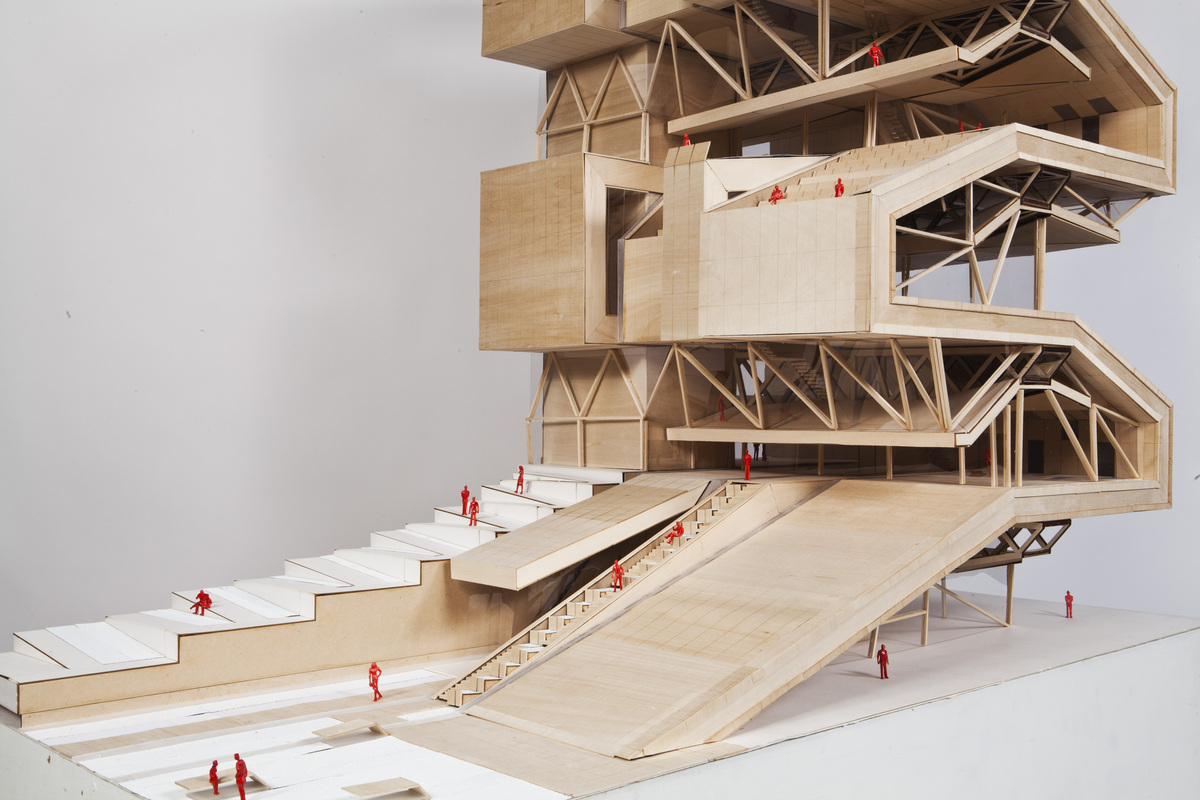
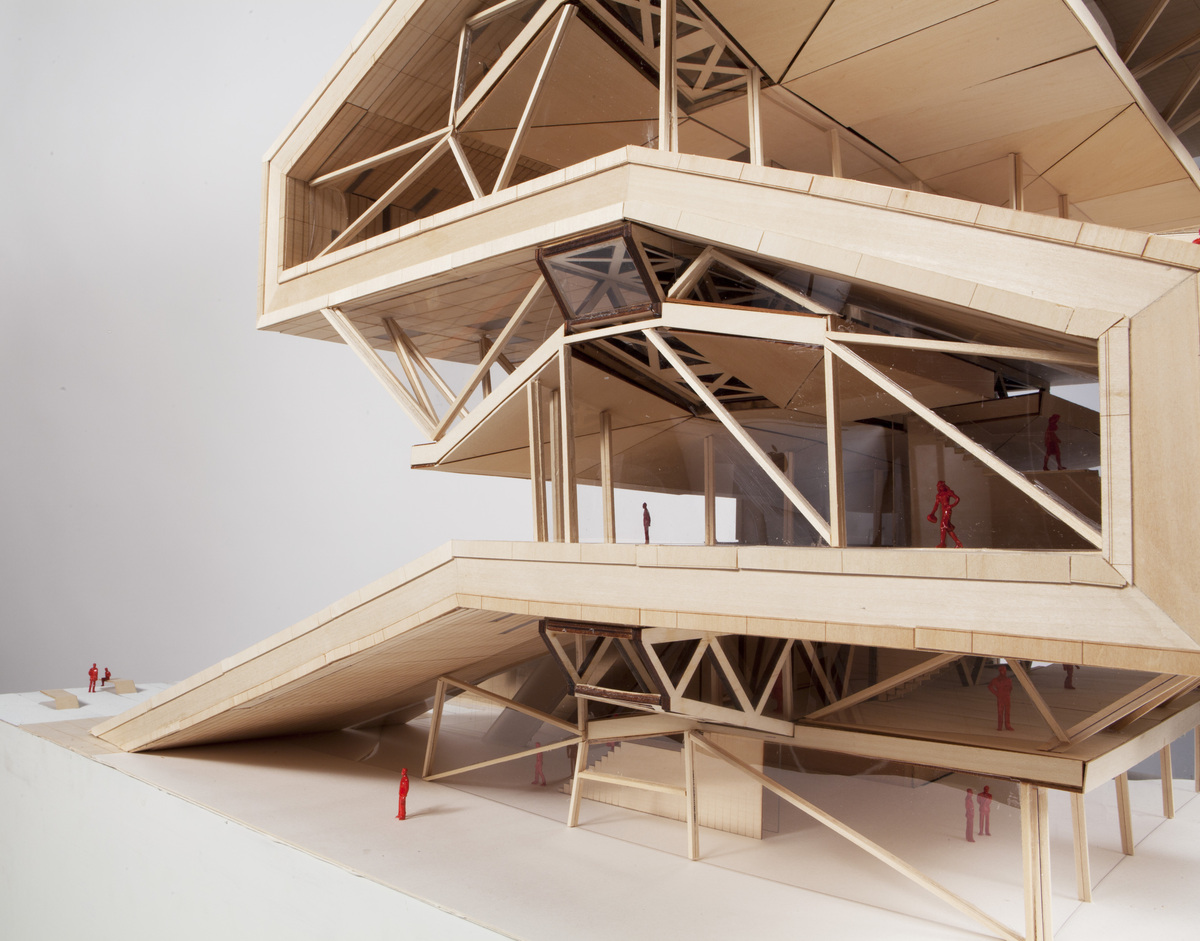
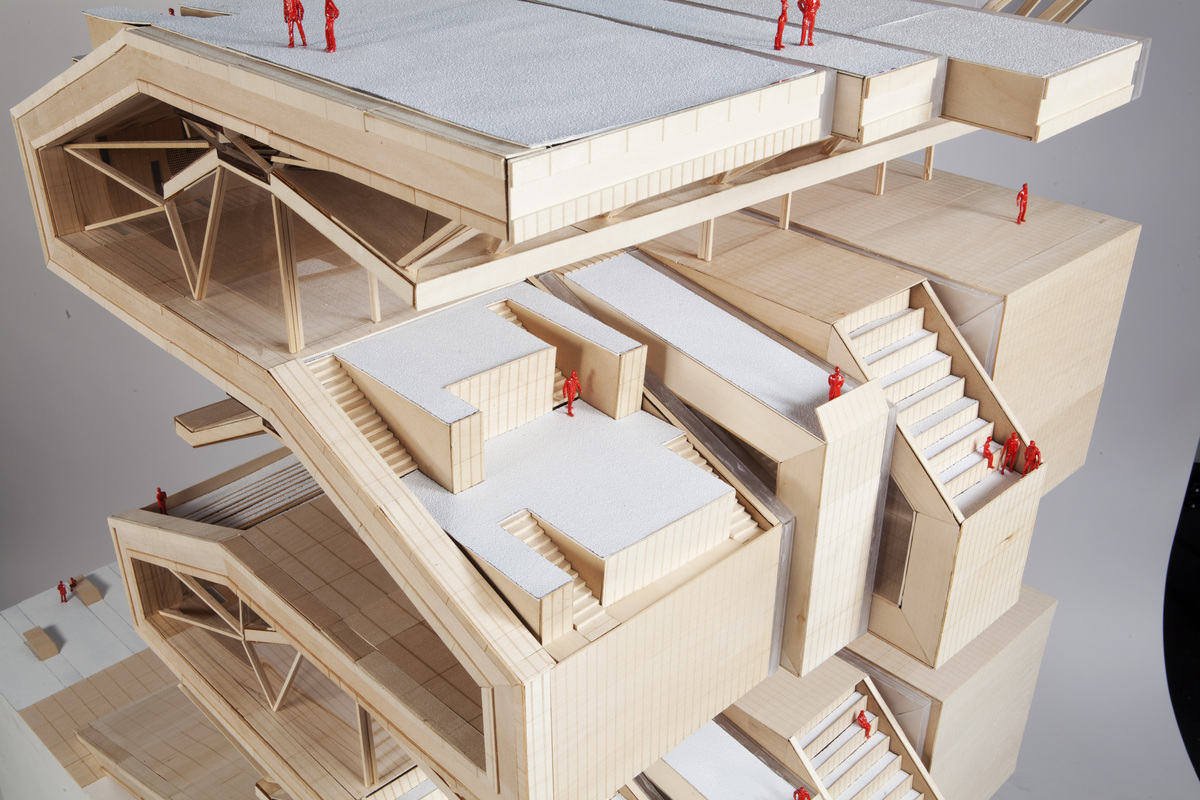
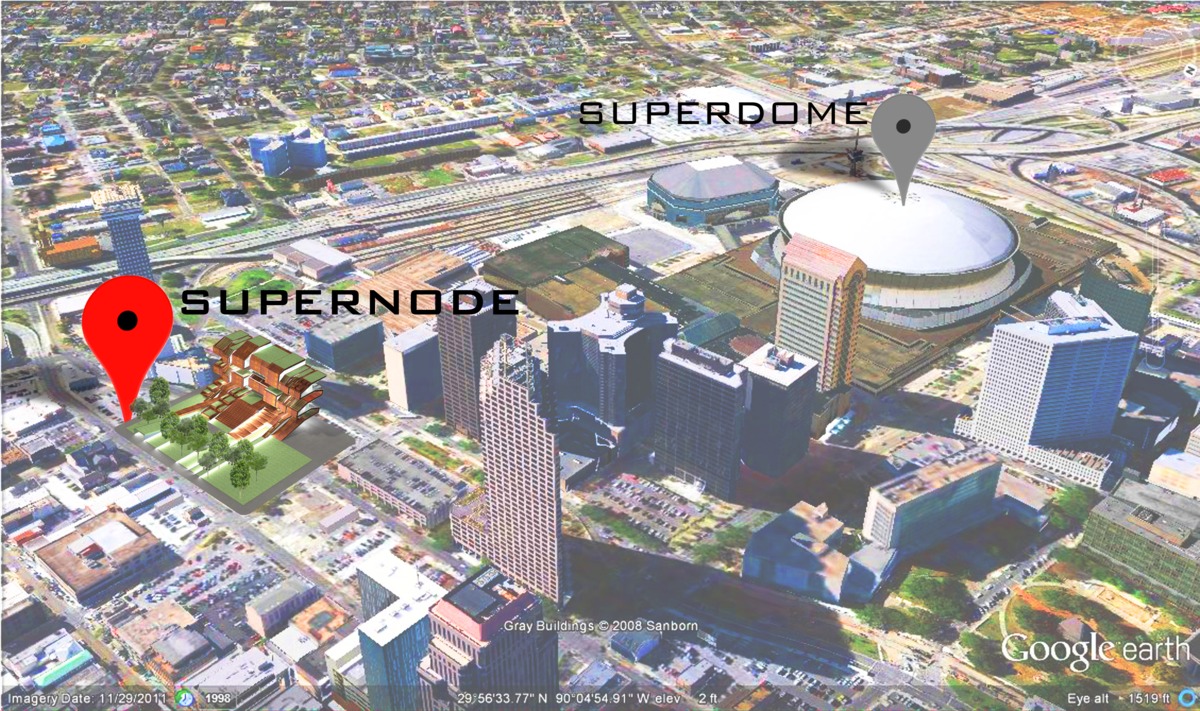
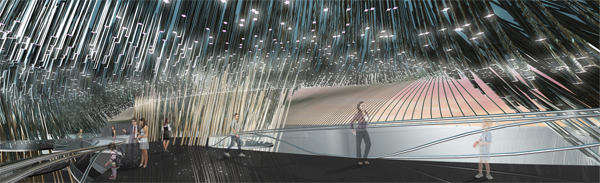
The superNODE brings landscape up and into the building intersecting with the extension of the urban environment.
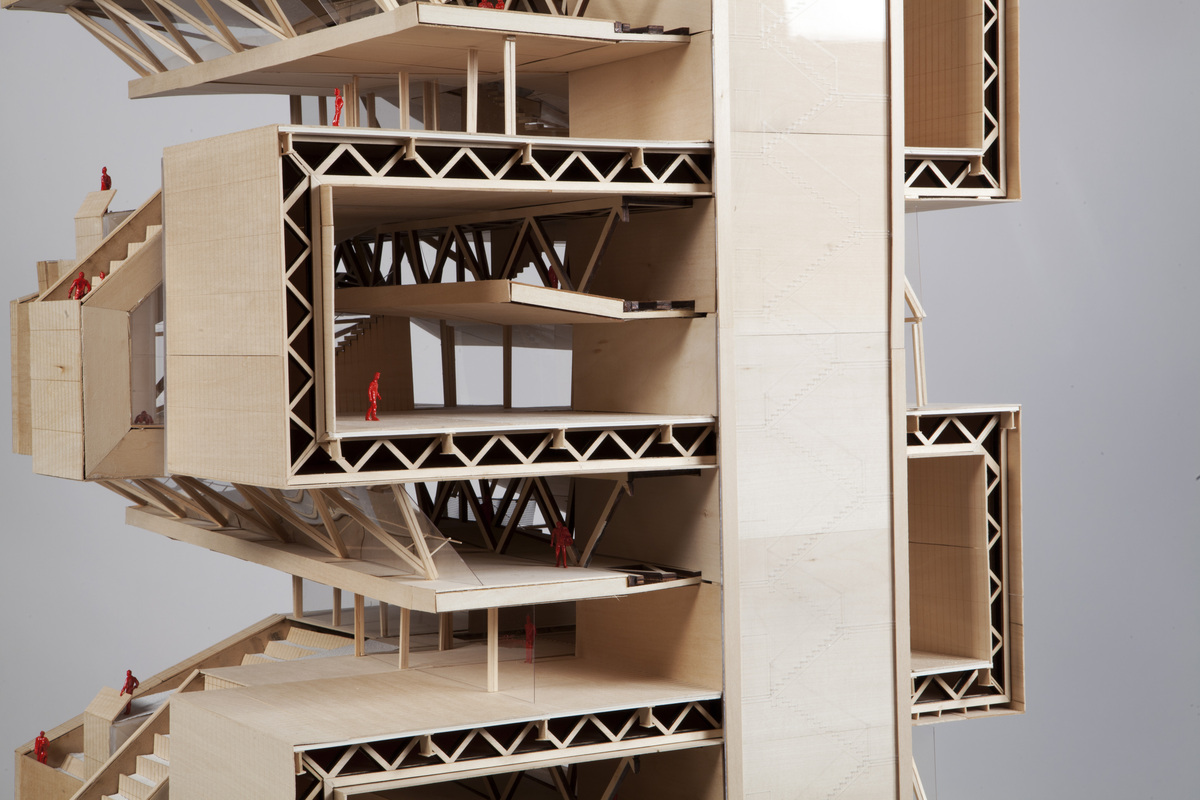
The superNODE exists as a positive cultural icon, safe haven, and a playground to stimulate cultural vitality in post-Katrina New Orleans. This mediatech acts as a node of culture in the city, harboring communication and exchange through media and public assembly. The string warps and deforms as a reaction to the program of the building. This allows it to perform in a multi-scalar way, creating opportunities for concerts and rallies with thousands of people, performances in the auditorium for hundreds, and smaller gatherings in lecture halls, classrooms, and private reading spaces for information exchanges at every scale.
Three urban conditions are established in the site and building: the public plaza, public park, and sidewalk. The plaza as an open space for gathering is established at the west side, continuing into the building’s interior. The public park continues up and into the building on the east side creating a continuous flow with the context and smaller scale elevated terracing. The sidewalk condition is created on the mezzanine levels as an overflow space of the programs on the main floors and as a consistent connector for the shifting strings. Program is defined in two axes, vertically through cultural character (perform, project, converge, commerce, and exchange) and horizontally through the action within (observe, catalog, assemble, create/workshop, individualize). The two sides of the string enhance the separation of program and multi-scalar functionality of the building by creating alternating pockets of space and distinguishing between the two orientations of the building.
Status: School Project
Location: New Orleans, LA, US
My Role: Designer
Additional Credits: Alex Dorn
Petaling Jaya Trade Centre
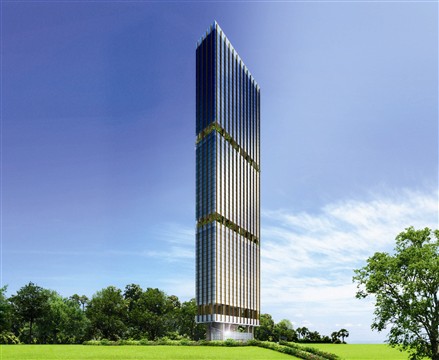
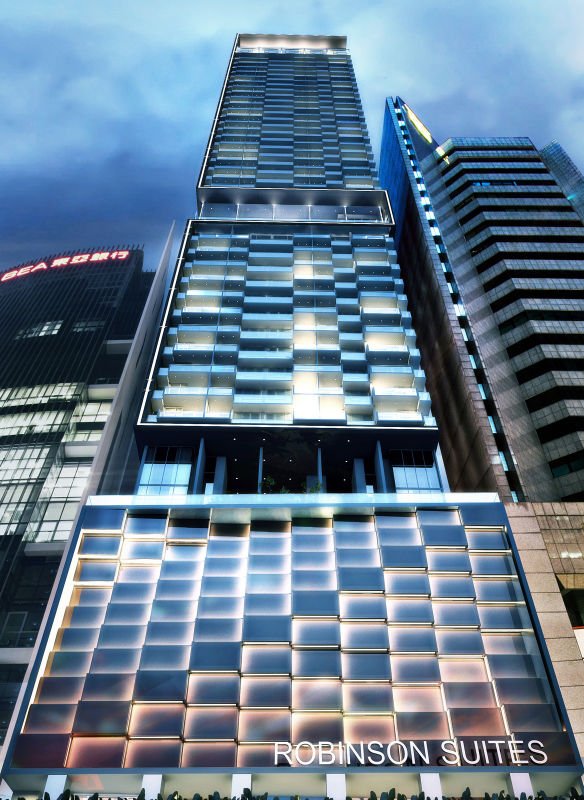
Me went to PJ Trade Centre yesterday and fell in love with the building. This is probably one of my favorite Brutalist architecture in Malaysia, is it Brutalist??? The Designer Architects for PJ Trade Centre is Kevin Low’s small projects and Yelill Architect.
Anyway, I really appreciate the honesty of the unfinished brick, concrete and its texture. Unlike Cesar Pelli’s Petronas Tower (world’s tallest twin tower) and its imposing steel and glass structure, PJ Trade Center on the other hand is really down to earth, blends with the surrounding and most important of all – the building will age gracefully.
Unfortunately, I don’t have my camera with me, and that could potentially be tragic in situation like this, then again, we have Google. Here are some pics by arkitrek.com. (Visit his blog for more)
Here are some bullshits from the developer’s marketing department:
Says Chan, `The faade of the building is inspired by the Malaysian culture of weaving and is like a woven cloth which wraps around the building in a scaled screen wrap. We believe that this unique faade could become one of the icons of PJ as it is visible from along Lebuhraya Damansara-Puchong (LDP).’
image source and copyright: arkitrek.com
Most of my non-architecture friends dislike these ‘type’ of architecture, they find it ugly, outdated, uncreative, dirty, and boring.
Thank you Mahathir Mohammad the evil, now the definition for creative and modern architecture in Malaysia has to be like Petronas Tower and Purtajaya, the elements are – Glass, Steel, Arabic Dome, Arabic Symbols, and if possible, it has to come in pairs.
Thanks you! Live long and prosper Mr.Mamak.
Vernon’s Vectors: Designing a New City
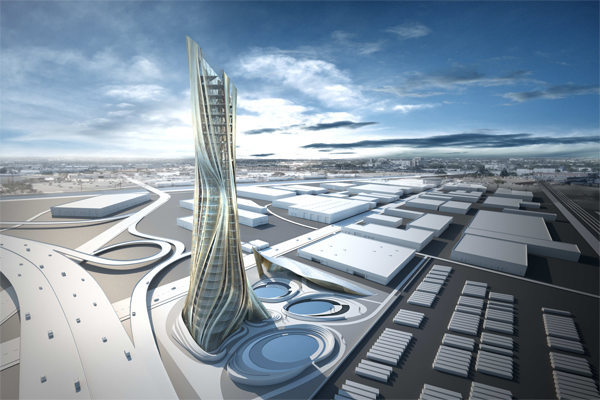
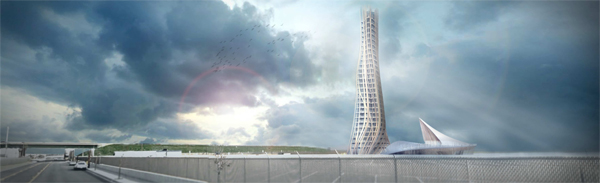
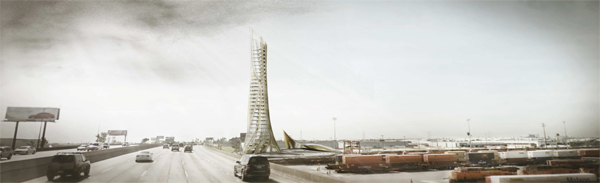
It is understood that cities and buildings are largely shaped by a dynamic flow of interrelated cultural, social, political and economic forces – the nature of possible interfaces between architecture and its various settings within the contemporary city. Rather, Vernon’s Vectors is a re-interpretation conceived by Daniel Cheng Lee and Jae Hwan Lee of how a building may deal with architecture on an urban scale. Rather than relying on the surrounding context of the city to begin addressing the project’s behavior, a singular yet versatile design system is implemented to influence the surrounding context to create an iconic image for the city – an inside out approach to urban systems.
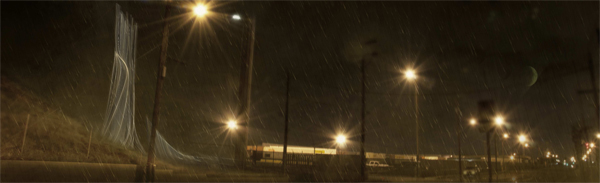
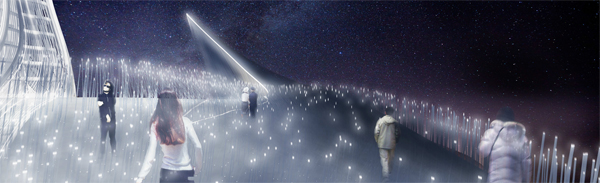
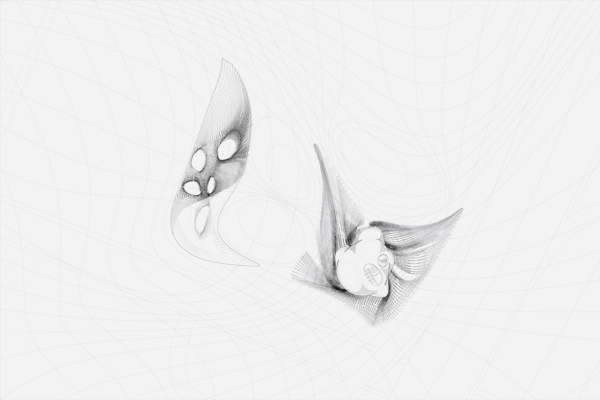
From an initial urban analysis of Vernon, California, the notion of the curve is extracted, abstracted, and injected back onto the city as a generative component. The spline is then exploited to create a tower and museum with intelligence gained from the high-rise and medium building studies. Specifically, The programmatic spaces found within the tower and museum are parametrically generated by means of controlled rotational repulsion that are extruded in the Z axis to create three dimensional space. The tower vertically tackles issues of the blend between interior space vs. exterior envelope, structural feasibility, figure-ground relationship and scale through coalescence and dispersion. The museum, on the other hand, uses the curve to address atmospheric effect and scale via a fiber optic lighting system in which the shapes of the extruded profile faces are determined by gallery spaces and circulation. These processes are threaded together in hopes of creating an iconic figure for the city of Vernon.
21st Century Oasis Proposal Wins Taiwan Tower Competition / Sou Fujimoto
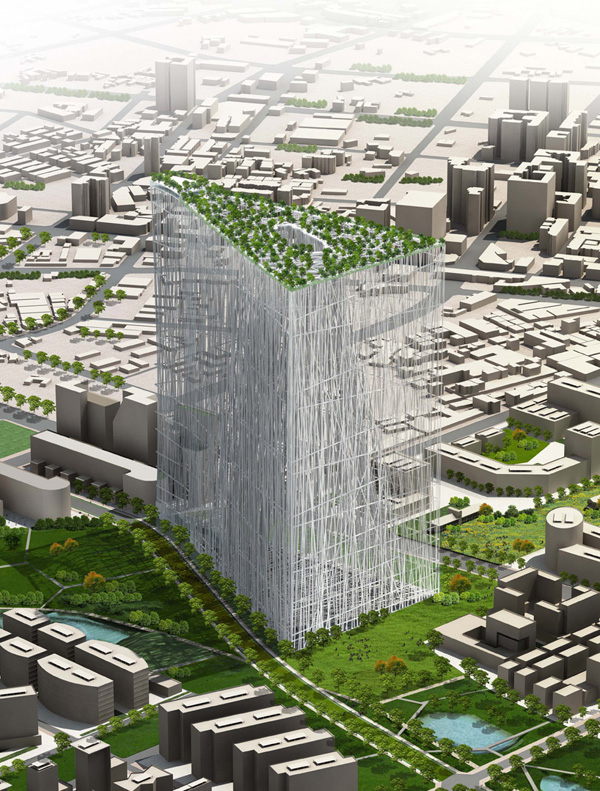
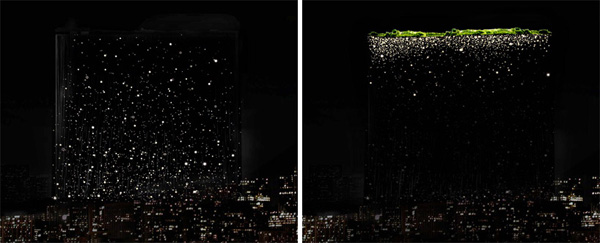
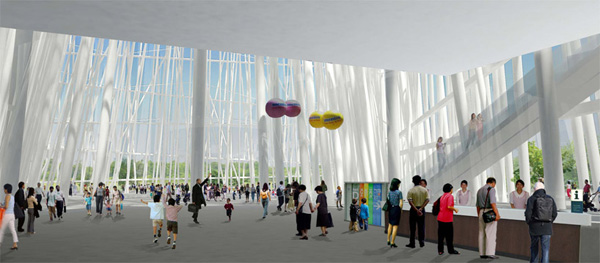
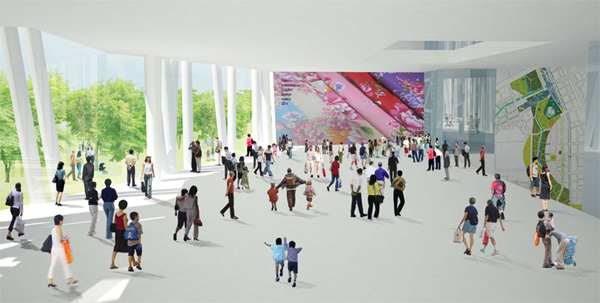
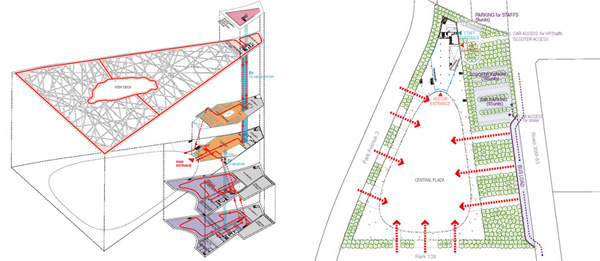
An ornate structural system suspending a patch of greenery high above the ground can serve as a concise explanation of the winning concept for the Taiwan Tower Competition for Taichung City. The structure will frame the semi-outdoor interior space and create an elevated urban retreat by providing a green rooftop island for the city inhabitants. Designed by Sou Fujimoto Architects, the tower is a symbolic landmark with strong sculptural rhetorics. Visible from many points throughout the city, the building reintroduces the beauty of nature into the urban fabric.
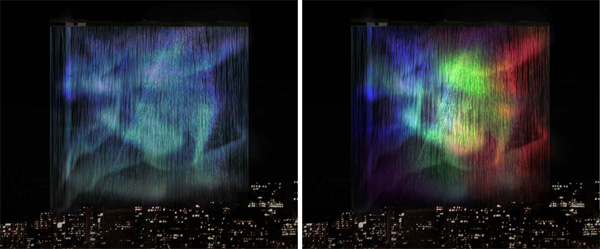
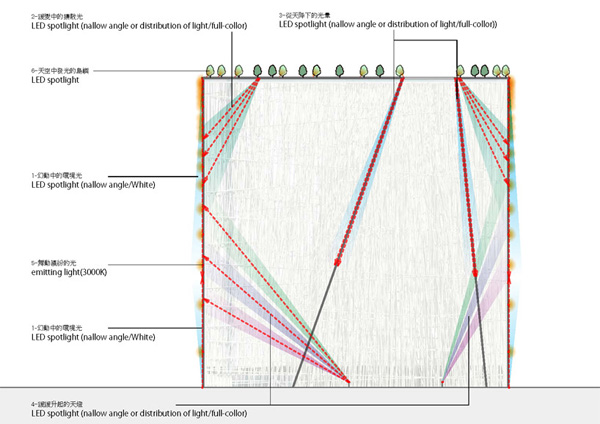
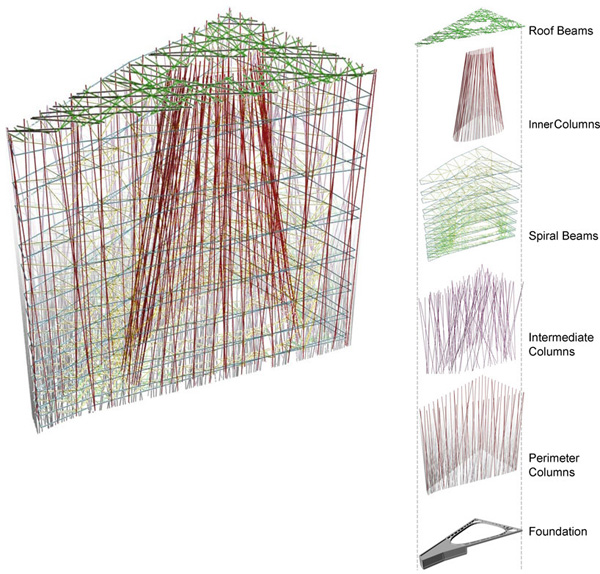
The building will comprise museum and exhibition spaces, leading visitors toward the rooftop garden. The facades contain LED lights which recreates the effect of a starry sky, or even Chinese lanterns. The project includes various renewable energy systems, including rainwater harvesting, solar hot water panels, wind turbines, etc. This collection of systems reduces significantly the consumption and carbon emissions. The structure itself relies on a hierarchically engaged systems of vertical perimeter, inner and intermediate columns, as well as spiral and roof beams. Eighty millimeter diameter hollow tubes which serve as leaning vertical elements provide lateral stability from wind and earthquake loads. A conic atrium is maintained within the center of the building’s footprint spanning the entire height of the tower.


asd


Posted in: